The important of heat treating properly: Chrysler (FCA US LLC) is recalling certain model year 2015-2016 Ram 1500
trucks manufactured June 17, 2015, to September 28, 2015. The affected vehicles may have been built with rear axles that were incorrectly heat treated.
Friday, October 30, 2015
Scary... How appropriate for Halloween.. this is what can happen without a hearth plate.. does your furnace have a hearth plate to protect the floor bricks and support your work load? www.luciferfurnaces.com


Tuesday, October 20, 2015
Stress relief - be proactive! This month's Industrial Heating Issue covers why it's important to maintain your equipment. Add to that keeping spare heating elements in stock to reduce down time.
Profitability and Proactive Maintenance in Heat Treatment
Profitability and Proactive Maintenance in Heat Treatment
Friday, September 4, 2015
Hats off to our great employees at Lucifer Furnaces who keep building top notch furnaces, ovens and replacement parts!
Happy Labor Day!
An interesting read about US Manufacturing: How the Industrial Sector celebrates Labor Day
Happy Labor Day!
An interesting read about US Manufacturing: How the Industrial Sector celebrates Labor Day
Tuesday, August 4, 2015
The Impact of Heat Treating on Your Daily Life
Great video from the Metal Treating Institute!
3 minutes - worth your time.
This is what we build furnaces to do... make metals stronger!
Thursday, July 16, 2015
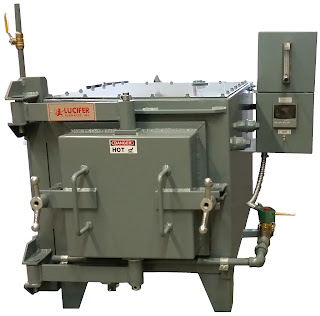
This Lucifer Furnaces model 7GT-B24 features an inert door curtain and will be heat treating parts in a nitrogen atmosphere in New England.

Wednesday, June 24, 2015
Laboratory Testing Inc. (LTI; Hatfield, PA), a full-service materials testing lab in the Philadelphia area, has added a Red Devil Dual Chamber furnace from Lucifer Furnaces, Inc.(Warrington, PA) to their line of analytical equipment. LTI specializes in performing metals testing through destructive testing methods, including mechanical, metallurgical, chemical and corrosion testing, and nondestructive testing (NDT) methods.
Destructive testing manager Brandon McVaugh chose this furnace “because their furnaces have good uniformity and are capable of meeting AMS 2750 requirements for aerospace, because of the generous work zones to accommodate larger parts, and because of their flexibility in options for temperature controllers and recording devices.”

Subscribe to:
Posts (Atom)